StrategyFuture state visioningService blueprintingEvolution mappingField research
Equipping a Fortune 200 retailer to pilot their own future shop experience
The client came to us with a future shop experience already envisioned and no way to start executing it. In under three months, our three person team turned that vision into service blueprints, a three horizon evolution map, and a guidebook built so they could run the pilot themselves.
Client
Fortune 200 Automotive Parts Retailer
Role
Associate Service Designer
Team
3 people · 2 to 3 months, 2024
Status
NDA, visuals anonymized
The brief
Earlier in the year, the client had worked with us to shape their future shop journey. They came back wanting to pilot it, but didn't know where to start.
Mapping the vision into a journey
The first step was understanding the shop's current state process and getting fluent in the industry's jargon. Using the client's years of industry experience, we mapped a current state diagram of the shop experience. Having lived the work for years themselves, the client found it eye opening: they could finally see, in tangible form, a process that had only ever lived in their heads.
We followed that with a field visit to a branded repair shop to observe the experience firsthand. We built the journey on confidence, not assumptions.
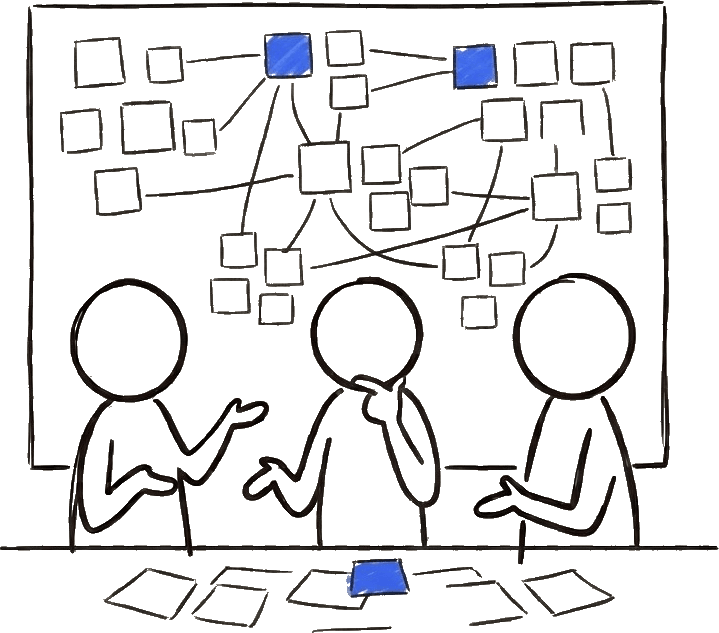
Working sessions with the client team, illustrated
From a vision to an executable blueprint and evolution map
The client came to us already with a clear view of their future shop experience. Our job wasn't to invent it; it was to translate that view into something they could act on.
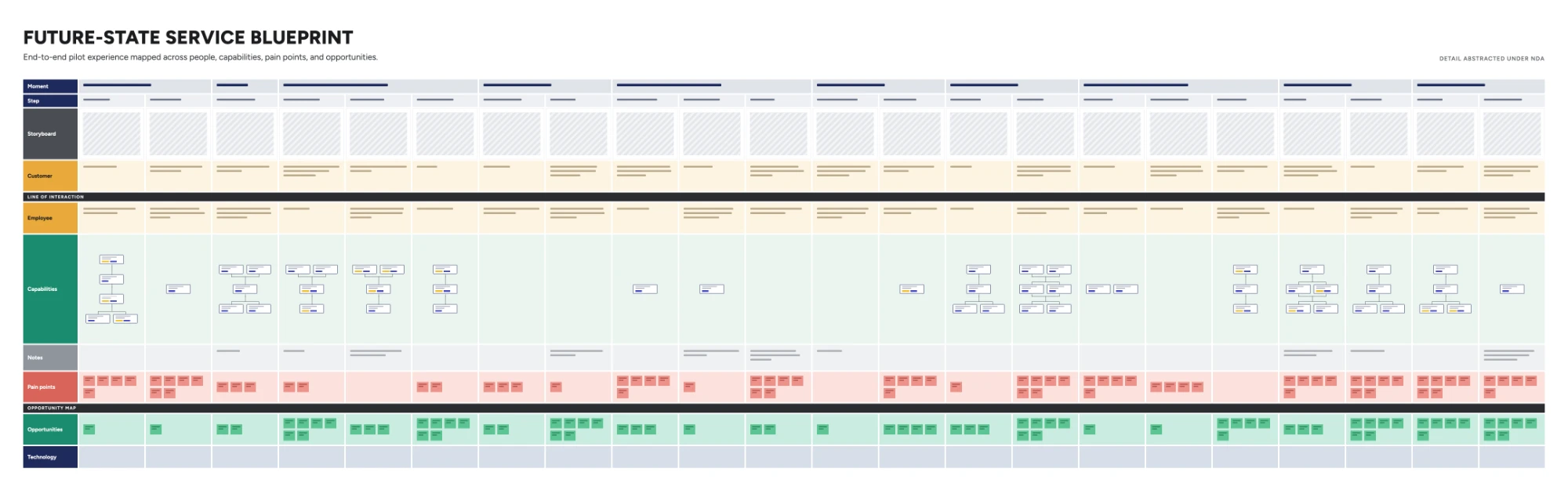
We captured it by mapping the journey, then built a service blueprint covering features, platforms, processes, policies, people, and the moments that created business value for the shop and for the client. Mapping value against journey moments showed us which moments mattered most and set our priorities for the evolution map.
Future-state service blueprint, detail abstracted under NDA
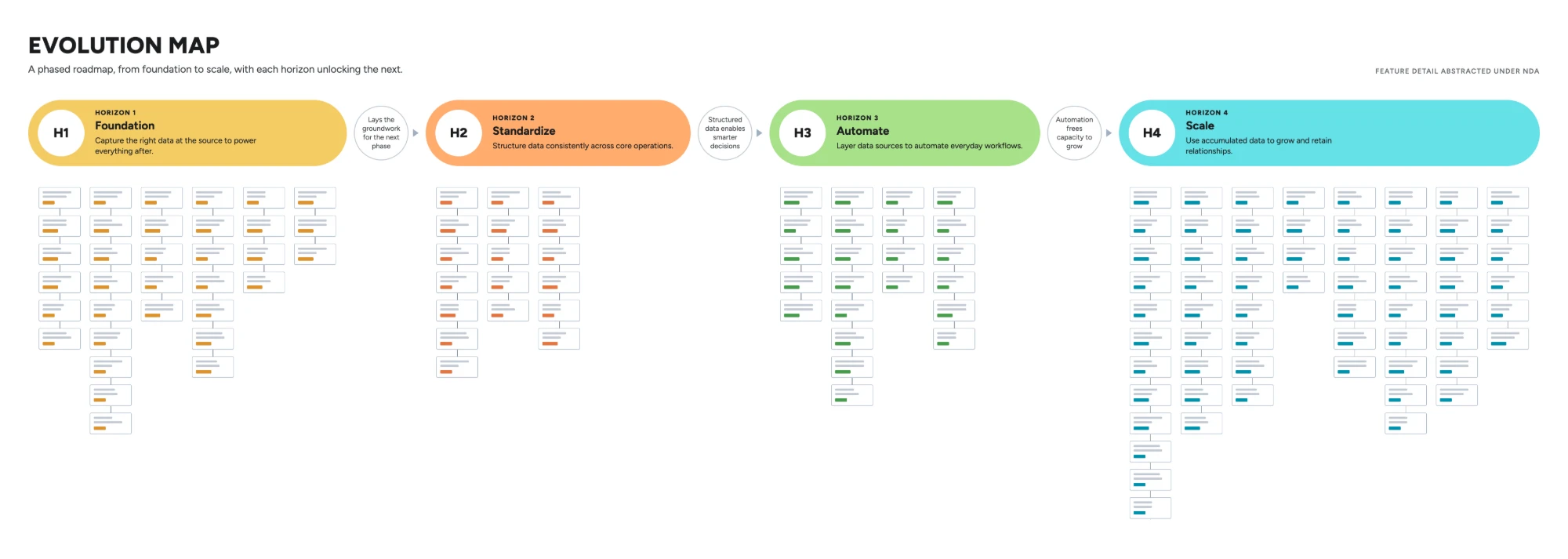
Horizon 1, the pilot
A testable, real world pilot of the highest priority service changes. Built for learning, not scale. Defined enough to run. Flexible enough to iterate.
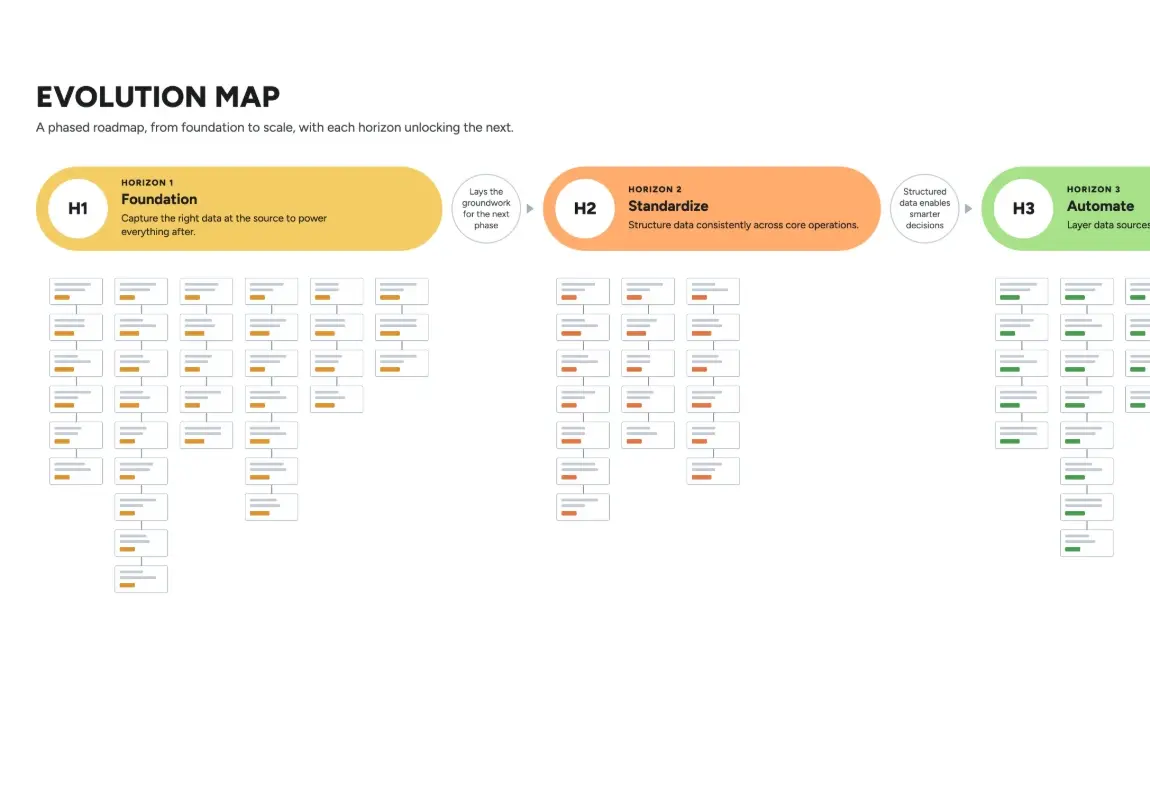
Horizons 2 and 3, scale and transform
Each horizon builds on proven capabilities. The evolution map shows not just what the future looks like, but the sequence of decisions that makes it achievable.
We brought our expertise to identify the key capabilities needed, note dependencies, sequence them across three time horizons, and define clear outcomes for each one, built through a week long collaborative working session with the client team, not handed over as a finished artifact. Being part of the process was what made it possible for them to pick it up and carry it forward.
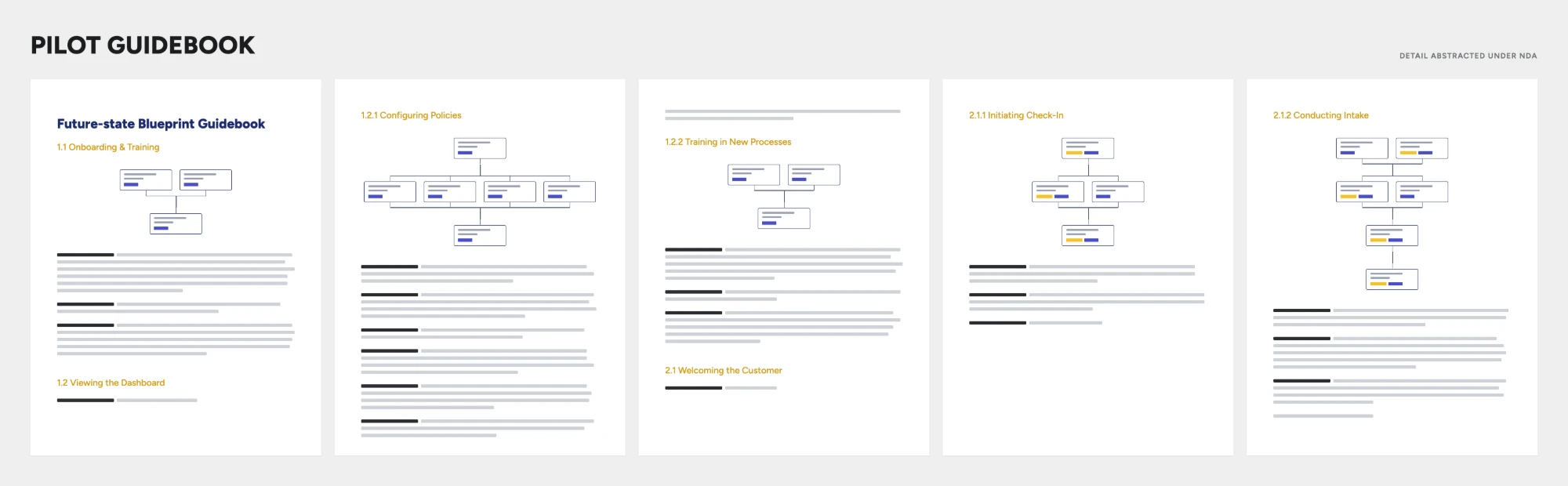
Even with the process we'd used, a blueprint with 60+ moments and multiple actors could feel overwhelming to share internally. I believe in speaking our clients' language, which is why I proposed and owned the guidebook that enabled handoff of our future state blueprint. We taught the client team how to read it, use it, and codify it for when they ran the pilot themselves.
“The real measure of a consulting engagement isn't the quality of the artifacts. It's whether the client can act on them without you. The guidebook was my answer to that question.”
AI in the service design process
With the rise of GenAI in 2024, there was no clear formula for how it could support service design consulting work. So I leaned into experimenting. When we fed AI entire interview transcripts to find insights, the results were generic and surface level. But when we fed it team debrief transcripts, it captured connections and organized our thinking in ways that genuinely helped us synthesize. The verdict: GenAI is a tool for organizing thinking, not replacing it. The nuances that make insight work are inherently human; AI couldn't catch them.
That point of view didn't stay a personal practice. I brought it back to the studio and later formalized it into the AI approach I led on the caregiving project.
What this project asked of me
This project asked me to think beyond the deliverable: not making a journey map because journey maps are what service designers make, but staying genuinely adaptive, thinking about what the client actually needed, designing the handoff as carefully as the work itself, and staying curious about tools like AI even when the playbook didn't exist yet. The AI experimentation, the guidebook, and the field visit weren't prescribed. They came from paying attention to whether the work would land after we left.
Pilot guidebook, detail abstracted under NDA
What I owned: pilot guidebook concept, design, and build, narrative and story writing of the journey work, AI experimentation practice. What I helped lead: current state and future journey diagram, experience principles, storyboarding. What I supported: service evolution map (horizons 1 to 3), pilot service blueprint, measurement frameworks.